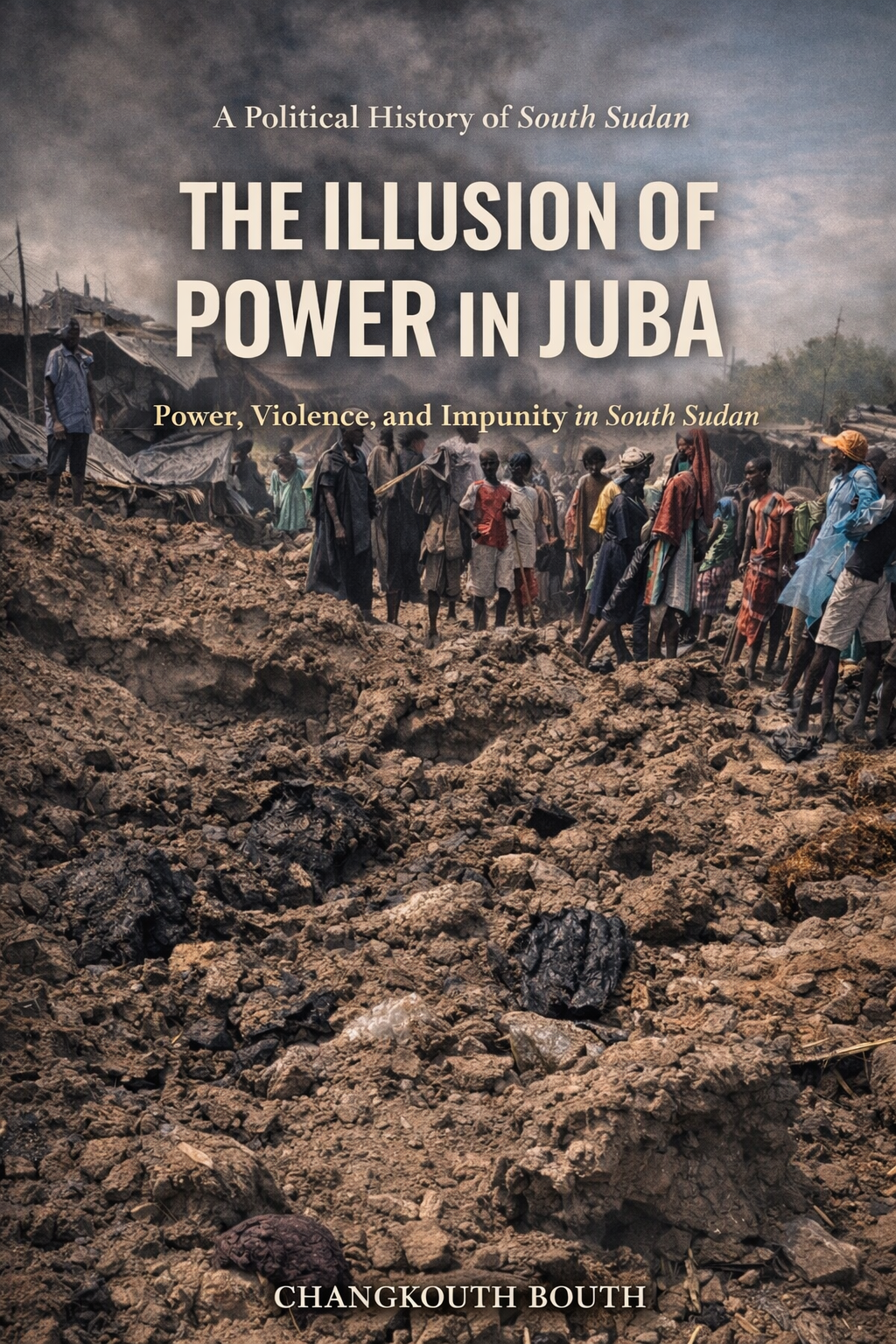
For decades, the idea of independence lived more powerfully than any institution that would later govern it. It existed in refugee camps, in cattle camps, in Western part of Sudan where I was born, grew, in my grandmother`s whispered prayers and war songs. It was carried by men and women who had lost homes, families, and entire childhoods to a war they did not choose.
When independence finally came on July 9, 2011, it felt inevitable. As if history had finally corrected itself.
In Juba, people flooded the streets. Old men cried openly. Mothers lifted children onto their shoulders so they could witness the raising of a new flag. For one day, the future felt uncontested.
But the foundations of the new state were fragile long before the celebrations ended.
The Sudan People’s Liberation Movement had never fully transformed from a liberation army into a governing institution. Its strength was forged in war, not administration. Loyalty had been rewarded over competence. Violence had been normalized as a political tool. These habits did not disappear with independence.
They were carried into government.
Dr. John Garang, the movement’s founder, had imagined a different outcome. His vision of a “New Sudan” emphasized unity, reform, and equality. Yet his sudden death in 2005 removed the one figure capable of holding the movement together through moral authority rather than force.
What followed was not transition, but consolidation.
Independence did not create a nation. It exposed unresolved power struggles that had merely been postponed.
By 2012, signs of decay were visible. Billions in oil revenue vanished. Public servants went unpaid. Corruption was acknowledged publicly but punished privately—if at all. A letter from the president himself admitted massive theft by senior officials, yet no prosecutions followed.
The dream survived, but belief began to erode.
What many did not yet realize was that the greatest threat to South Sudan would not come from Khartoum, or from rebels at the margins.
It would come from within the state itself.
Chapter 2 — From Liberation to Rule: The Rise of Kiir
When Dr. John Garang died in July 2005, South Sudan lost more than a leader. It lost a balancing force.
Garang had held together a fragmented movement through personal authority and vision. His death removed the one figure capable of mediating ambition without force. What followed was not collective leadership, but a vacuum.
Salva Kiir Mayardit inherited that vacuum.
At the time, Kiir was widely perceived as a transitional figure—quiet, uncharismatic, and lacking Garang’s intellectual reach. Many believed his role would be temporary. They misjudged him.
Kiir’s strength did not lie in vision, but in consolidation. Rather than reform institutions, he centralized authority. Loyalty replaced merit. Corruption became a mechanism of control.
The SPLM never completed its transformation into a civilian political party. Internal democracy remained weak. Decision-making narrowed around the presidency.
Military power was placed directly under presidential command. Elite units answered only to Kiir. Political disagreement was increasingly framed as a security threat.
Dr. Riek Machar, then Vice President, positioned himself as a reformer. He called publicly for accountability and internal democracy. His popularity made him a threat.
Rather than engage politically, Kiir moved to contain him. Allies were sidelined. Institutions were hollowed out. Power consolidated.
By the time South Sudan gained independence in 2011, the foundations of authoritarian rule were already in place.
Chapter 3 — The Slow Burn: Power, Corruption, and Fear
Violence in South Sudan did not erupt without warning. It announced itself slowly, through patterns that were ignored, normalized, or deliberately concealed.
Between 2005 and 2013, the country lived through a prolonged period of political decay. Institutions weakened while the appearance of stability was maintained.
Corruption became systemic. Billions in oil revenue disappeared. In 2012, the president himself acknowledged massive theft by senior officials. No one was prosecuted.
Corruption was not punished. It was rewarded.
As public trust eroded, the state responded by expanding its security apparatus. Military spending increased. Elite units were strengthened. Civilian oversight collapsed.
Political debate narrowed. Journalists were harassed. Civil society was intimidated. Fear became a governing tool.
Within the SPLM, divisions hardened. Reformists were marginalized. Party democracy stalled. Ethnic mistrust deepened quietly.
The army was reshaped along loyalty lines. Officers perceived as independent were sidelined. Soldiers noticed. Civilians noticed.
By 2013, political language shifted. Leaders spoke of betrayal and enemies. Rumors of coups circulated freely. The fire was no longer hidden.
When the cabinet was dissolved in July 2013, the final guardrails fell away.
The country stood on the edge. The match had already been struck.
Chapter 4 — The Night of Betrayal
The night of December 15, 2013 did not begin with chaos. It began with orders.
In Juba, the capital of the world’s newest nation, soldiers inside the Presidential Guard were instructed to assemble. Official explanations would later describe a misunderstanding, a quarrel, a spontaneous clash. Survivors, defectors, and investigators would tell a different story.
What unfolded that night was not an accident. It was a rupture long prepared.
Inside the Presidential Guard
The Presidential Guard was not a neutral force. It had been deliberately structured along lines of loyalty, trained separately, and placed under direct presidential authority. By late 2013, ethnic imbalance within the unit was widely known.
On the evening of December 15, Nuer soldiers were ordered to disarm. Dinka soldiers were not.
This single act shattered any remaining illusion of unity inside the guard. Arguments followed. Confusion spread. Gunfire erupted within the barracks.
Within hours, the incident was framed by the presidency as a “coup attempt.” No evidence was presented. No investigation preceded the accusation. Yet the narrative was deployed immediately, with devastating consequences.
From Barracks to Streets
By dawn on December 16, violence had moved beyond the barracks. Soldiers loyal to the presidency fanned out across Juba. Checkpoints appeared overnight. Identification was demanded. Names became death sentences.
In neighborhoods such as Gudele, Mangaten, Mia Saba, and New Site, door-to-door searches began. Houses were entered without warrants. Men were pulled outside. Women were interrogated. Children watched.
Those identified as Nuer were separated. Many were executed on the spot.
“They asked our names. My brother stepped forward. They shot him.”
— Survivor, Gudele
Survivors later described soldiers working from lists. Others spoke of accents, facial features, and names determining fate. Bodies were left in streets, compounds, and drainage ditches.
This was not random violence. It followed a pattern.
The Role of Command
The scale and coordination of the killings raised immediate questions about command responsibility. General Paul Malong Awan, then Chief of General Staff, was repeatedly named by survivors and investigators as central to directing operations in Juba. Units under his influence were reported moving systematically through targeted neighborhoods.
The killings continued for days. During this time, senior government officials appeared on state media denying that civilians were being targeted. They repeated the coup narrative. Behind the statements, bodies accumulated.
Silence from Within
Perhaps most haunting was the silence of those who could have intervened. General James Hoth Mai, a Nuer and Chief of Staff at the time, had returned to Juba only days earlier from abroad. Yet he did not appear publicly. He did not issue orders halting the violence. He did not speak.
Whether sidelined, intimidated, or neutralized, his absence became symbolic. The chain of command had collapsed — or had been bypassed entirely.
Hunting Civilians
By the second and third day, the killings took on a ritualistic cruelty. Men were forced to lie face down before being shot. Some were burned inside homes. Others were killed at checkpoints after reciting their names. Women were raped. Families were wiped out.
Entire communities fled. Those who could escape ran toward United Nations bases, carrying children and whatever they could hold. Others hid in ceilings, latrines, and abandoned buildings. Some survived by pretending to be dead.
Exact numbers will never be known. Investigations later estimated that thousands of Nuer civilians were killed in Juba alone within days.
Erasing the Evidence
As international attention grew, efforts to erase evidence followed. Bodies were removed at night. Some were dumped in the Nile. Others were buried in unmarked mass graves. Witnesses were warned to remain silent.
The government denied that any massacre had occurred. No official mourning was declared. No memorial was permitted. The dead were denied even acknowledgment.
A Point of No Return
December 2013 marked the end of South Sudan’s innocence as a state. The violence did not merely ignite a civil war. It destroyed the idea that the state belonged to all its citizens equally.
The night of betrayal was not only a night of killing. It was the moment the state turned against its own people.
Chapter 5 — Juba in Flames: The Collapse of the Capital
When the gunfire subsided, Juba did not return to normal. It entered a new reality.
The capital of South Sudan, once a symbol of independence, became a city of fear. Streets emptied. Shops closed. Neighborhoods fell silent. What remained was not peace, but shock.
For those who survived, survival itself became uncertain.
Flight and Fragmentation
As violence spread across the city, civilians fled in every direction. Families were torn apart. Some ran without knowing where they were going. Others hid for days in homes, latrines, or unfinished buildings, without food or water.
Those who could reach United Nations bases did so at immense risk.
By the end of December 2013, UNMISS compounds in Tongping and Jebel were overwhelmed. Thousands arrived carrying nothing but trauma. The compounds were never designed to shelter civilians indefinitely, yet they became the only places where survival felt possible.
“We ran with nothing. I left the pot on the fire. I thought we would return in one hour. We never went back.”
— Displaced mother, Juba
Juba fractured into zones of fear and refuge.
The UN Compounds Become Cities
Inside UN bases, new cities emerged: tents, markets, improvised schools, grief, and disease. Families slept on bare ground. Sanitation collapsed. Children cried through the night.
Yet the compounds represented safety. Outside the gates, soldiers patrolled. Inside, at least, weapons were restrained.
The UN response was uneven. In some cases, peacekeepers opened gates and saved lives. In other cases, gates remained closed as crowds begged for entry. Those moments would haunt the mission for years.
A City Under Surveillance
Outside the compounds, Juba became a city under watch. Checkpoints remained. Movement was restricted. Ethnic profiling did not disappear when the initial killings slowed. It became quieter and more selective.
Many Nuer civilians who survived chose to flee the city entirely — to neighboring countries, to PoC sites, or into hiding. Juba lost a large portion of its population almost overnight.
The capital was no longer a shared space. It became a symbol of exclusion.
Denial as Policy
As international attention intensified, the government doubled down on denial. Officials appeared on state television insisting that order had been restored. They claimed civilians had not been targeted. They repeated the narrative of a thwarted coup attempt.
The dead were never acknowledged. No public apology was issued. No official mourning was declared. No independent investigation was permitted inside Juba.
Families searched hospitals and morgues that offered no answers. Names were whispered, not recorded. Grief was private. Silence was enforced.
The Economy of Fear
Violence shattered livelihoods. Markets closed. Businesses were looted or abandoned. Employment collapsed. Prices soared.
Fear became currency. Those with connections to power survived. Those without were pushed further into vulnerability.
The Transformation of Identity
The most lasting impact was psychological. Trust between communities evaporated. Neighbors avoided one another. Identity became a matter of survival.
Children who witnessed killings carried those memories into adulthood. Many would grow up knowing only displacement, camps, and fear.
The violence in Juba did not end when the shooting stopped. It embedded itself into daily life.
From Capital to Catalyst
The collapse of Juba was not contained. News of the killings spread rapidly. Armed mobilization followed. The war expanded beyond the capital into Bor, Bentiu, Malakal, and beyond.
What happened in Juba became the catalyst for national war. The city that once symbolized unity became the place where the nation broke.
Juba was no longer just a capital. It was the first battlefield.
Chapter 6 — The White Army Marches
The killings in Juba did not remain confined to the capital. News traveled faster than official denials. Survivors fled with stories etched into their bodies. Phones rang across Jonglei, Unity, and Upper Nile. What had happened in Juba was understood immediately for what it was.
The response was not planned in conference rooms. It emerged from grief.
Young Nuer men began to mobilize. Many had never served in the SPLA. They were cattle keepers, students, herders — bound not by command structures, but by communal obligation. They called themselves the White Army.
The Meaning of the White Army
The White Army was not a standing force. It had no headquarters, uniforms, or salaries. Its origins lay in local defense traditions, where youth organized to protect cattle and communities when the state could not or would not.
In December 2013, the White Army was reawakened not by ideology, but by survival.
Many believed that what happened in Juba was not an isolated massacre, but the beginning of a broader campaign. The march was framed as preemption — a declaration that extermination would not go unanswered.
The March Northward
Columns formed across Jonglei and Upper Nile. Barefoot and lightly armed, they moved through Bor, Ayod, and surrounding areas. SPLA positions collapsed or retreated as the youth advanced.
The speed of the movement shocked the government. What had been dismissed as undisciplined mobs revealed itself as a mass mobilization fueled by rage, memory, and communal discipline.
“We did not march for politicians. We marched because our people were hunted.”
— White Army fighter
Their destination was clear: Juba.
Foreign Intervention
As the White Army approached strategic areas, the balance shifted. The Ugandan People’s Defence Force intervened directly on behalf of the Juba government. Fighter jets and helicopter gunships struck advancing columns.
Airstrikes inflicted heavy casualties. Yet the march did not immediately collapse. Despite losses, some units reached within kilometers of the capital.
The Halt Order
It was at this point that Dr. Riek Machar intervened. Fearing catastrophic civilian casualties and international escalation, he ordered the White Army to halt and withdraw.
The decision remains controversial. Some saw it as restraint. Others as a lost opportunity. What is clear is that the march exposed the fragility of the state.
The White Army did not capture Juba. But it shattered the regime’s sense of invulnerability.
The youth returned to their communities carrying unresolved grief and unacknowledged sacrifice.
Chapter 7 — International Silence and Selective Pressure
The international community did not ignore South Sudan’s collapse. It responded — cautiously, selectively, and too slowly.
Statements were issued. Condemnations were voiced. Yet decisive action was consistently deferred.
The United Nations Dilemma
UNMISS was mandated to protect civilians, yet it was unprepared for the scale of violence. Peacekeepers were overwhelmed. In some cases, gates were opened and lives were saved. In others, civilians were turned away.
The mission became both a refuge and a symbol of international paralysis.
“We ran to the UN because there was nowhere else. Some entered. Others died at the gate.”
— Displaced civilian
The African Union’s Broken Promise
The African Union established a Commission of Inquiry, which concluded that crimes against humanity had been committed. It recommended the creation of a Hybrid Court for South Sudan.
The recommendation was historic. Its implementation never followed.
Juba resisted. Timelines slipped. Consultations stalled. Justice was postponed in the name of peace.
Western Diplomacy and Caution
Western governments imposed targeted sanctions and issued travel bans. These measures affected individuals, not systems. Enforcement was inconsistent.
At the same time, diplomatic engagement continued. Stability was prioritized over accountability. Fear of state collapse shaped policy.
Regional Interests
Neighboring states pursued their own interests. Uganda intervened militarily. Sudan maneuvered diplomatically. Kenya and Ethiopia hosted negotiations while financial flows continued largely unchecked.
South Sudan became a site where regional politics outweighed civilian protection.
Silence as Policy
The combined effect of international caution was silence. Not absolute silence, but strategic quiet — enough concern to appear engaged, not enough pressure to change behavior.
For victims, this silence was devastating. It signaled that their suffering was negotiable.
The world feared another failed state. In that fear, it chose accommodation over justice.
Silence did not stop the war. It prolonged it.
Chapter 8 — The Business of War
War in South Sudan did not persist only because it could not be stopped. It persisted because it became profitable.
As the conflict spread beyond Juba, violence transformed from a political crisis into an economic system. Guns did not only kill. They generated income. The longer the war lasted, the more actors depended on its continuation.
South Sudan became a war economy — one where suffering was not merely a consequence, but a resource.
Oil: The Lifeline of a Violent State
Oil remained the backbone of the economy even as the country collapsed. Production fluctuated and pipelines were disrupted, but extraction never fully stopped. What changed was where the money went.
Oil revenues became regime survival funds — diverted into military logistics, arms procurement, and elite patronage networks. Oversight disappeared. Public budgets became symbolic documents.
Ordinary people saw no benefit. Soldiers went unpaid. Civil servants starved. Yet the war machine kept running.
Militarization as Investment
The government invested in security as its primary project. Elite units expanded. Local militias were recruited. Loyalty was purchased through cash, promotions, and impunity.
Commanders were often allowed to enrich themselves through checkpoints, informal taxation, and looting. This created incentives to maintain disorder.
Opposition forces also exploited war economies, taxing trade routes and diverting resources under their control. The distinction between political struggle and criminal enterprise blurred.
Arms, Contracts, and Supply Chains
Weapons continued to flow into South Sudan through opaque channels. Arms procurement relied on intermediaries and informal networks. Contractors handled logistics, transport, and sometimes training.
The war created demand, and demand created supply.
Outsourcing Violence
Over time, violence was increasingly outsourced. Foreign security contractors and mercenaries were reported in various roles, from training elite units to protecting assets and enabling military operations.
Outsourcing offered political insulation. Abuse could be denied, blamed on local commanders, or attributed to “unknown forces.”
Humanitarian Aid as a Resource
Humanitarian access became a bargaining tool. Aid agencies faced restrictions, intimidation, and taxation. Supplies were diverted. Visas and travel permits were delayed to extract concessions.
In some areas, civilians survived only through aid — while armed actors profited from controlling it.
“They called it a ‘fee’ for security. But there was no security. Only hunger.”
— Displaced civilian
Money Leaves the Country
Much of the wealth extracted from South Sudan did not remain inside the country. Funds were transferred abroad through proxies. Properties were purchased in regional capitals. Comfort was secured far from the frontlines.
This global dimension of corruption insulated elites from domestic collapse. Even as the state failed, private wealth endured.
Why Peace Threatened the System
Real peace would require audits, prosecutions, and reforms that expose financial crimes. It would threaten networks built on war.
As a result, peace was accepted in form, not substance. Agreements were signed, but implementation was delayed, diluted, or sabotaged.
The business of war did not require victory. It required continuation.
Chapter 9 — The Cost of Silence
By 2016, the numbers alone told a devastating story. Hundreds of thousands were dead. Millions were displaced. Entire regions had emptied. A nation had fractured beyond recognition.
Yet the violence continued, not only because of bullets and bombs, but because of silence.
Silence from leaders who denied crimes. Silence from institutions that delayed justice. Silence from a world that chose stability over truth.
This silence carried a cost. South Sudan paid it in lives.
Death Without Witness
Exact casualty figures will never be known. Bodies were buried in mass graves, dumped in rivers, or left unrecorded in abandoned villages. Families fled before names could be counted.
Investigations documented only fragments of a much larger tragedy: civilians killed in reprisal attacks, scorched-earth operations, and ethnic targeting across multiple regions.
Displacement as a Permanent Reality
Displacement became a way of life. Camps built for emergencies turned into long-term settlements where children were born, raised, and educated behind fences.
UN Protection of Civilians sites in places like Bentiu and Malakal became enduring symbols of state failure — citizens living under international guard inside their own country.
“My children grew up inside the camp. They know the fence more than they know home.”
— Displaced father
The Normalization of Suffering
As the war dragged on, suffering became routine. Headlines moved on. Emergency became ordinary. Many people learned to live with hunger, insecurity, and loss as if it were permanent.
Grief became private. Justice became unimaginable. Silence was internalized.
The Crushing of Civil Society
Civil society was systematically weakened. Activists were threatened. Journalists were detained or driven into exile. Academics fled. Organizations that documented abuses were harassed.
Public space collapsed. Fear replaced debate.
Children of War
The greatest cost of silence was paid by children. Millions grew up without stable schooling or safety. Many witnessed violence, displacement, and hunger as normal experiences.
A generation born in hope was raised in horror.
Victory Parades and Funerals
While survivors mourned, the state performed triumph. Official ceremonies celebrated victory while families in exile buried loved ones without bodies.
Power celebrated itself while citizens whispered the names of the dead.
Silence Within the Home
Not all silence was imposed from above. Fear entered homes. People stopped speaking openly. Atrocities were mentioned only in whispers, if at all.
When a society cannot speak its truth, it fractures from within.
What Silence Leaves Behind
Silence does not erase violence. It preserves it. Unacknowledged crimes do not fade. They return as mistrust, revenge, and renewed conflict.
South Sudan’s war was fought with weapons, but it was sustained by silence. The cost of that silence continues to be paid every day.
Chapter 10 — A Nation in Ruins
The war did not end. It mutated.
By the late 2010s, large-scale fighting had slowed in some areas, but the damage was already embedded in every institution of the state. South Sudan was no longer living through a temporary crisis. It was living inside collapse.
Peace agreements were signed. Power was shared on paper. Deadlines were announced and quietly missed. For civilians, “peace” meant little more than survival without gunfire.
Economic Freefall
The economy collapsed silently and then completely. The national currency lost value. Inflation erased salaries. Public servants went unpaid for months and years.
Hunger became universal. Even in areas untouched by direct violence, families struggled to eat. Aid replaced wages. Survival replaced ambition.
The contradiction was cruel: a country rich in oil could not feed its people.
Infrastructure as Memory
Roads disappeared. Bridges collapsed and were never repaired. Entire regions became inaccessible except by air.
Infrastructure became memory — something people remembered having, not something they used.
A State That Could Not Provide
The state no longer delivered basic services. Education was inconsistent. Healthcare was inaccessible. Security was arbitrary. Justice was absent.
Citizens encountered the state primarily through soldiers and police — often as threats rather than protectors.
Delayed Democracy
Elections were postponed again and again. Each delay was justified by insecurity, lack of funding, or unfinished reforms. Each delay entrenched the same leadership.
Power became permanent by default.
The Death of Belief
Perhaps the deepest ruin was invisible. Belief died — belief in institutions, leadership, and the idea of South Sudan as a shared project.
Young people no longer dreamed of serving their country. They dreamed of leaving it.
A nation without belief is not at peace. It is waiting.
Chapter 11 — The Struggle for Justice
Justice has haunted South Sudan since the day the killings began. It follows survivors into exile and lingers in mass graves without names.
Justice is spoken of often. It is delivered never.
Justice as a Threat to Power
Accountability is not delayed because it is difficult. It is delayed because it threatens power. Any credible justice process would examine command responsibility and political decisions made at the highest level.
Justice would expose how violence was organized, enabled, and denied.
The SPLM/SPLA Legacy
The SPLM/A was never subjected to accountability for wartime abuses. Violence was normalized. Loyalty outweighed responsibility to civilians.
Independence did not dismantle this culture. It institutionalized it.
Ethnic Protection as Strategy
Calls for justice were framed as attacks on entire communities rather than on individuals. Ethnicity became political armor.
This strategy protected perpetrators while deepening mistrust.
The Hybrid Court That Never Came
The African Union concluded that crimes against humanity had been committed and recommended a Hybrid Court. The promise was repeated in peace agreements and quietly buried.
Justice was postponed in the name of stability.
“They tell us to forgive, but no one has ever asked what happened.”
— Survivor in exile
Courts Without Independence
Domestic courts lacked independence. Judges were appointed by the executive. Witness protection did not exist. Cases involving senior officials were impossible.
The law applied downward, never upward.
Why Justice Still Matters
Justice matters not because it guarantees healing, but because without it, healing is impossible.
Impunity does not stabilize societies. It guarantees repetition.
Chapter 12 — Memory, Resistance, and the Path Ahead
South Sudan’s war has been told as a story of violence. Less often is it told as a story of memory.
Yet memory is where the future of the country now resides.
Memory as Resistance
When institutions fail, memory becomes the archive. When courts are silent, memory becomes testimony.
Survivors carried names, stories, and final moments across borders. Families became historians. Grief became documentation.
The Role of the Diaspora
As repression intensified inside the country, the diaspora preserved truth. Documentation, advocacy, and remembrance continued from exile.
Distance created space for truth to survive.
Youth and the Unfinished Nation
A generation born after independence inherited a broken state. Yet it also inherited questions older leaders refused to ask.
Questioning became resistance.
Reconciliation Without Illusion
Reconciliation cannot be built on denial. Forgiveness without truth is coercion.
Peace without justice is performance.
The Final Choice
South Sudan faces a choice: continue living under illusion, or confront truth and rebuild honestly.
The war exposed what power without accountability produces. The years that followed revealed the cost of silence.
What comes next depends on whether memory is honored or erased.
The illusion of power cannot last forever.
×
Why Support This Project?
2013.quest exists to preserve memory, document truth,
and make historical record accessible without restriction.
This book is offered freely so survivors, students, journalists,
and researchers can read without paywalls, fear, or political pressure.